
'You cannot stop these models from getting better. There is competitive and business pressure and if the US stops then maybe China will go ahead.'

RBI Deputy Governor Rohit Jain highlighted that banks are well-positioned to deploy $133 billion mobilised through FCNR(B) deposits, especially with strong credit demand ahead of the festival season, while also stressing the importance of robust technology governance and cyber defences in the financial sector.

Iranian President Masoud Pezeshkian declared that Iran will not succumb to "bullying" from the US and Israel, vowing to protect national interests amidst escalating West Asian hostilities. During his visit to New Delhi for the BRICS summit, Pezeshkian also discussed strengthening bilateral ties with Prime Minister Narendra Modi and advocated for local currencies in BRICS trade, positioning Iran as a strategic energy and transport partner.

Prime Minister Narendra Modi, in bilateral talks with Chinese President Xi Jinping, emphasized that both nations must show sensitivity to each other's core issues and be guided by mutual respect, sensitivity, and interest. Modi highlighted the critical importance of peace and tranquillity along the Line of Actual Control for the development of India-China relations, while also addressing concerns regarding Taiwan and Tibet.

Bangladesh-China and Bangladesh-US relations have evolved from reluctant engagement to increasingly consequential strategic partnerships.

A Bain & Company report projects the global AI market must reach nearly USD 6 trillion annually by 2031 to sustain massive infrastructure investments. This growth will largely depend on new innovations beyond productivity gains, with a significant gap needing to be filled by emerging revenue streams like autonomous vehicles, physical AI, and new AI-driven products. The report also highlights the surge in hardware and semiconductor industries due to AI compute demand and the importance of AI absorption for Indian companies.

Regional OTT platform STAGE is set to release India's first AI-made biopic on farmer leader Sir Chhotu Ram. The project leverages artificial intelligence for various aspects of filmmaking, from visualisation to character generation, aiming to reduce production costs and expand storytelling possibilities for underserved cultures and languages.

India is set to develop its first 100% hydrogen-powered Direct Reduced Iron (DRI) plant, a Rs 207-crore national pilot project led by CSIR-IMMT. This initiative aims to significantly reduce carbon emissions in the steel sector and achieve net-zero commitments, focusing on adapting the technology to India's domestic iron ore conditions.
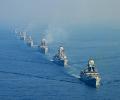
India may have a vast coastline and a strategic location, but it will become a true maritime nation only when its people understand, value and actively participate in the maritime ecosystem, asserts Vice Admiral Biswajit Dasgupta (retd).
West Bengal has launched an Emerging Quantum and Semiconductor Technologies (EQST) section at CSIR-CGCRI to attract investments and position the state as a hub for next-generation technology. Minister Kalyan Chakraborti highlighted India's need to invest in these crucial sectors and outlined the state's plans to collaborate with institutions and leverage budget initiatives to foster research and start-ups.

The highlight of the successful BRICS Summit was its ability to deliver a joint statement that all members, including Iran and the United Arab Emirates, embroiled in the war in West Asia, signed.

India's milk supply is struggling to keep pace with rising demand as heat, fodder shortages and low animal productivity threaten dairy production.

Prime Minister Narendra Modi cautioned against the 'weaponisation' of technology and critical minerals at the BRICS summit, advocating for cooperation to foster shared prosperity. Concurrently, Chinese President Xi Jinping announced plans for an open-source AI ecosystem for BRICS nations, positioning Beijing as a key technology partner amid global AI competition.

In recent years, China and Russia have pushed for de-dollarisation within BRICS, which India has resisted. One reason is that India does not want to hurt its relationship with the United States, and another is the fear of China controlling trade because the renminbi is considered the strongest currency in the bloc today.

Japan is deepening its defence relationship with India while simultaneously expanding its economic, infrastructure and security engagement with countries around India -- particularly Bangladesh. The result is an emerging Japanese conception of South Asia in which India remains the strategic anchor, but the geography surrounding India is becoming increasingly important, points out Varun Arya.
The Consumer Affairs Ministry is developing machine-readable SMART standards using AI to reduce industry compliance burden. This initiative aims to modernise India's standards ecosystem, with the Bureau of Indian Standards transitioning from a regulator to a facilitator, promoting private sector testing and faster processes.

The Union environment ministry's expert panel has approved a fourth underground coal mining project in Madhya Pradesh's Umaria district, close to the vital Bandhavgarh-Achanakmar tiger corridor. These clearances, granted since July, raise concerns about biodiversity and tiger movement, despite conditions for wildlife conservation plans and compensatory afforestation. The projects involve significant forest land diversion and pose risks like land subsidence and habitat disturbance for Schedule-I species.

'Xi is conveying that China is a pre-eminent power, and India should modulate its actions or approaches accordingly.'
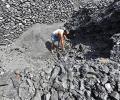
The Indian coal ministry announced that 147 commercial coal blocks auctioned since 2020 are expected to attract approximately 55,000 crore in capital investment, generate 490,000 jobs, and contribute significantly to state revenues.

Forty-nine-year-old Meloni has been Italy's prime minister since October 22, 2022.

The question for the next 20 years is not whether India can become a $5 trillion or $10 trillion economy. Those are attractive targets, but the real question is whether India can create enough productive jobs, educate its children properly, make its cities liveable, and give hundreds of millions of people a substantially better life, asserts Ramesh Menon.
The UK has successfully test-fired a US torpedo from an undersea drone, marking a significant advancement in submarine technology for the AUKUS partners (UK, US, Australia). This development coincides with Prime Minister Andy Burnham's visit to the UN General Assembly, where he is discussing global challenges like AI, the Ukraine conflict, and West Asia security with international leaders, and announced the UK will host the G20 Leaders' Summit in Manchester next November.

The National Skill Development Corporation (NSDC), in collaboration with Amazon Web Services (AWS) and Cultus Education, has launched a nationwide initiative to provide cloud and AI skilling to 1.5 lakh learners. This programme aims to equip youth, especially from Tier 2 and Tier 3 cities, with essential technology skills and job-ready training, contributing to India's goal of becoming a global innovation hub.

Union Finance Minister Nirmala Sitharaman has urged significant investment in AI infrastructure, semiconductors, and quantum technology, identifying them as India's next major growth frontiers. Speaking at an IIT Madras Alumni Association event, she emphasized the need to build hardware, skills, and institutional ecosystems to harness these technologies, countering perceptions that India is lagging in AI. Sitharaman also highlighted the potential for increased investment in defence production, particularly in unmanned systems and drones, stressing collaboration between academia and industry.

The United States launched military action against two Iranian launch systems on Larak Island, prompting Iran to claim retaliation with ballistic missile launches targeting two US air bases in Jordan.

Union Minister Nitin Gadkari has expressed his determination to blacklist contractors and suspend officials responsible for delays and shoddy execution of infrastructure projects. He plans to personally inspect the delayed Mumbai-Goa Highway in October and urged the Goa government to develop roadside amenities and promote green initiatives along the route. Gadkari also highlighted the importance of infrastructure for economic growth and sustainable development.

'The most effective investment approach is one that aligns with an investor's temperament, risk tolerance, and decision-making style.'

India's national security adviser was in Dhaka for roughly three-quarters of the day on Thursday to prepare the ground for Bangladesh Prime Minister Tarique Rahman's visit to New Delhi.

Trump has announced an 'Infinite Life' agreement with Denmark and Greenland, claiming it grants the United States permanent control over security and the ability to prevent adversaries from establishing a military presence or making sensitive investments on the strategically vital Arctic island.

The FCNR (B) stratagem relies on using public money to defend the rupee. The State subsidises foreign borrowing to attract dollars. This tool requires large-scale borrowing to make a material difference against a gross external flow of $11 billion a day. A commensurately large fiscal cost falls upon the exchequer. The ministry of finance will choose how much it is willing to spend in exchange for this round number, points out Ajay Shah.

RBI Governor Sanjay Malhotra stated that the central bank consistently views fintechs as 'valuable partners' in shaping India's future financial system, crediting the sector with expanding financial inclusion, enhancing customer experience, and streamlining credit delivery, particularly for MSMEs.

India and China are in what experts call 'a cooperation-versus-competition situation'.

US President Donald Trump asserted that Iran is attempting to remove him from office, believing a Democratic administration would permit them to develop nuclear weapons. Trump vowed to prevent Iran from acquiring nuclear capabilities and stated he has no regrets about his confrontational approach, claiming he would act the same way again. He also linked the ongoing conflict to rising stock markets and oil prices, and controversially suggested renaming the Strait of Hormuz.
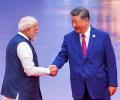
Ahead of Xi Jinping's visit, National Security Advisor Ajit Doval and Chinese Foreign Minister Wang Yi held extensive talks in Beijing on August 25 on the boundary issue and reached an eight-point consensus.

Nepal has launched a diplomatic initiative to secure climate-related compensation from major greenhouse gas emitters, asserting that post-disaster assistance for recent deadly flash floods should be viewed as a moral and legal liability, not charity. Foreign Minister Shisir Khanal highlighted Nepal's disproportionate suffering from global warming despite negligible emissions, citing rapid glacier melt and extreme mountain disasters. The country has formally approached the Loss and Damage Fund board for urgent financial aid following a catastrophic flash flood in the Bhotekoshi river basin.

Analysts predict that developments in the West Asia conflict, crude oil prices, and upcoming US inflation data will be the primary factors influencing the Indian stock market next week, alongside foreign investor activity and global market trends.

BRICS members have expressed 'serious concerns' over the unilateral imposition of trade and finance-related measures, including higher tariffs and non-tariff barriers, stating these actions distort trade and are inconsistent with WTO rules. The grouping also highlighted elevated risks to the global economic outlook due to geopolitical tensions, trade fragmentation, and protectionism.

Fintech firm PhonePe has signed a Memorandum of Understanding (MoU) with the Ministry of Electronics and Information Technology (MeitY) to integrate its enterprise data intelligence platform, PulsePro, into the PM GatiShakti framework. This collaboration aims to provide granular, hyperlocal insights for national infrastructure planning, economic analysis, and holistic urban and rural development.

J R D Tata, chairman of the Tata group from 1938 to 1991, said that whenever he had to make a difficult decision, he would ask himself, what will be good for India, and what will be good for the Tatas. If he had a doubt, he would decide in favour of India. In the long run, it would turn out well for the Tatas too, he said, points out Arun Maira.
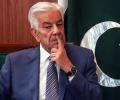
Pakistan's Defence Minister Khawaja Asif has reiterated the nation's unwavering commitment to the Makkah Joint Defence Agreement, underscoring its role in regional security following an attempted drone attack near the holy city of Mecca. The pact, signed by Pakistan, Turkiye, and Saudi Arabia, establishes a framework for collective deterrence against armed attacks.
